Our mission
We believe that each child is born with the wisdom of a thousand generations past. Our mission is to nurture their innate abilities and keep that spark shining bright in every child.
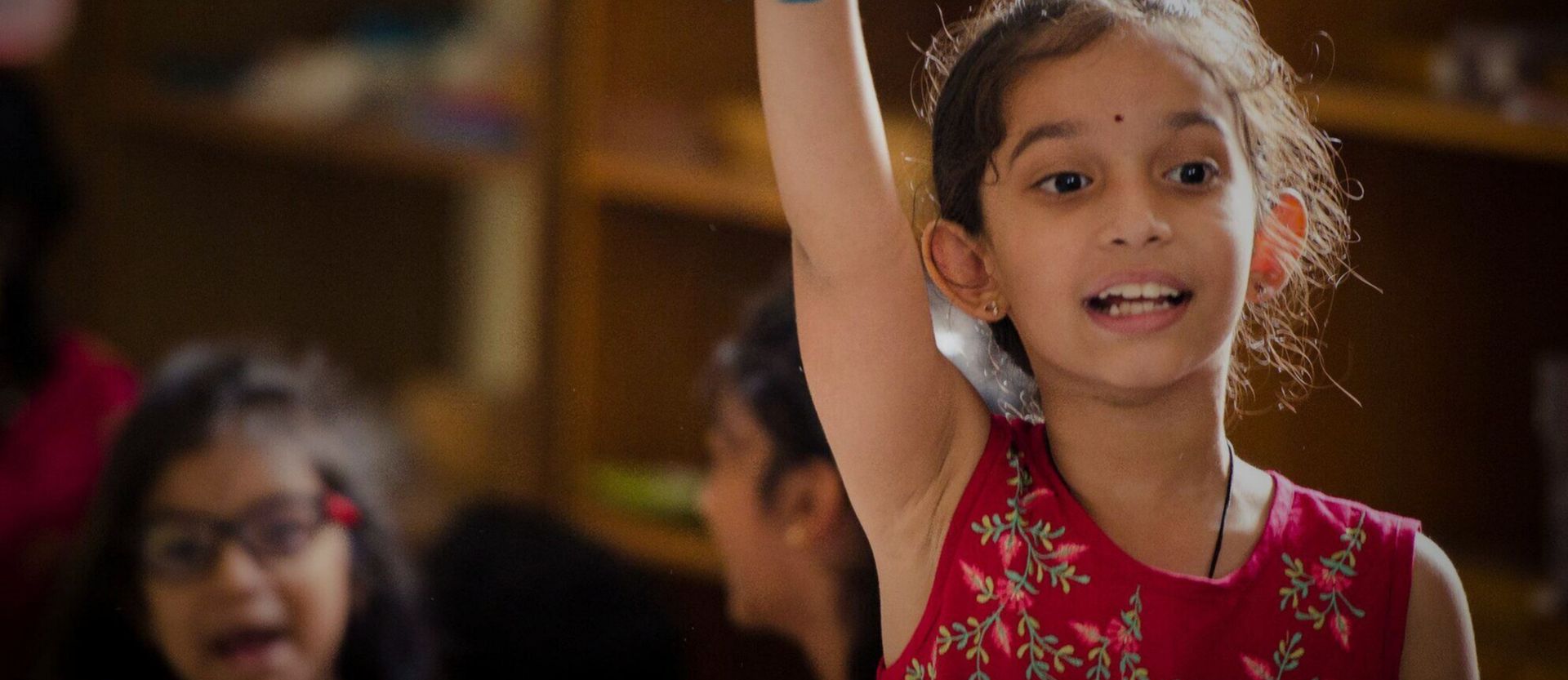
Montessori-inspired · Ages 2.5 to 15 · HYDERABAD
A school where children are respected, and free to grow into themselves.
Childhood. As it should be.
We believe that each child is born with the wisdom of a thousand generations past. Our mission is to nurture their innate abilities and keep that spark shining bright in every child.
Learning for life, not for tests. Curiosity that carries far beyond the classroom.
Our guides observe first, then support each child’s own path. Respect, empathy and togetherness come before everything.
Not standardised for convenience. Each child is observed, understood and guided.
Fewer children in each group means closer bonds and closer observation. We keep it that way.
Partner colleges give children access to labs, auditoriums, specialist professors and wider subject choices.
No fixed pace. No single textbook. Children learn through scientifically designed material, the five great stories, hands-on work, field visits and time with specialists. Children aged six to twelve ask “why” about everything. We make sure the answers never run out.
Are the colours on a butterfly’s wings black, or blue?
Where does the Sun go at night?
Do people at the South Pole fall off the Earth?
Children here are free to debate questions like that. Understanding grows from inquiry, never from being rushed.
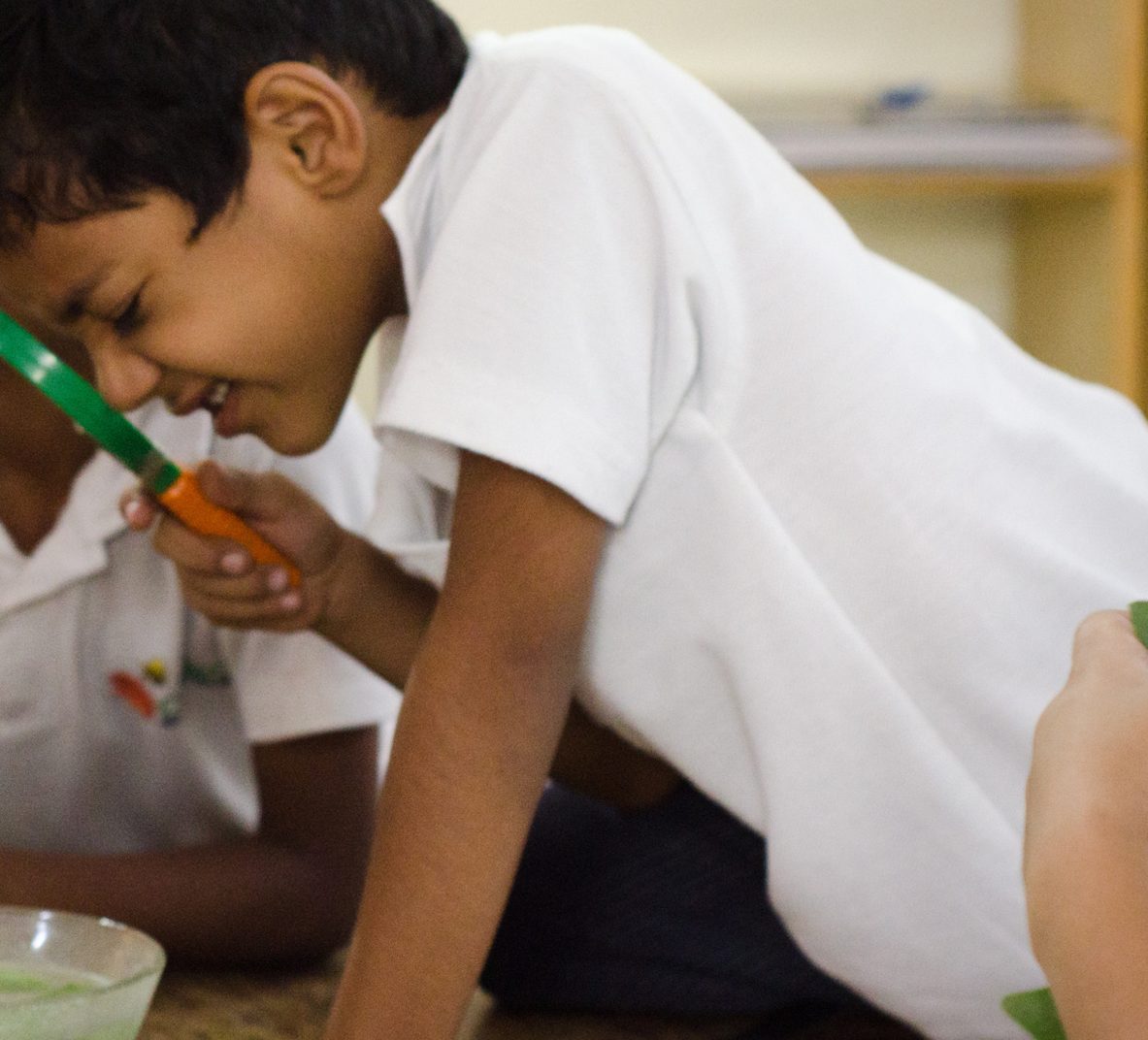
Three-year age spans. Younger children learn by watching; older ones grow by explaining.
Real life isn’t divided into subjects. One study of the planets can take in science, measurement, writing and art.
Long, unbroken periods of chosen work build concentration and persistence.
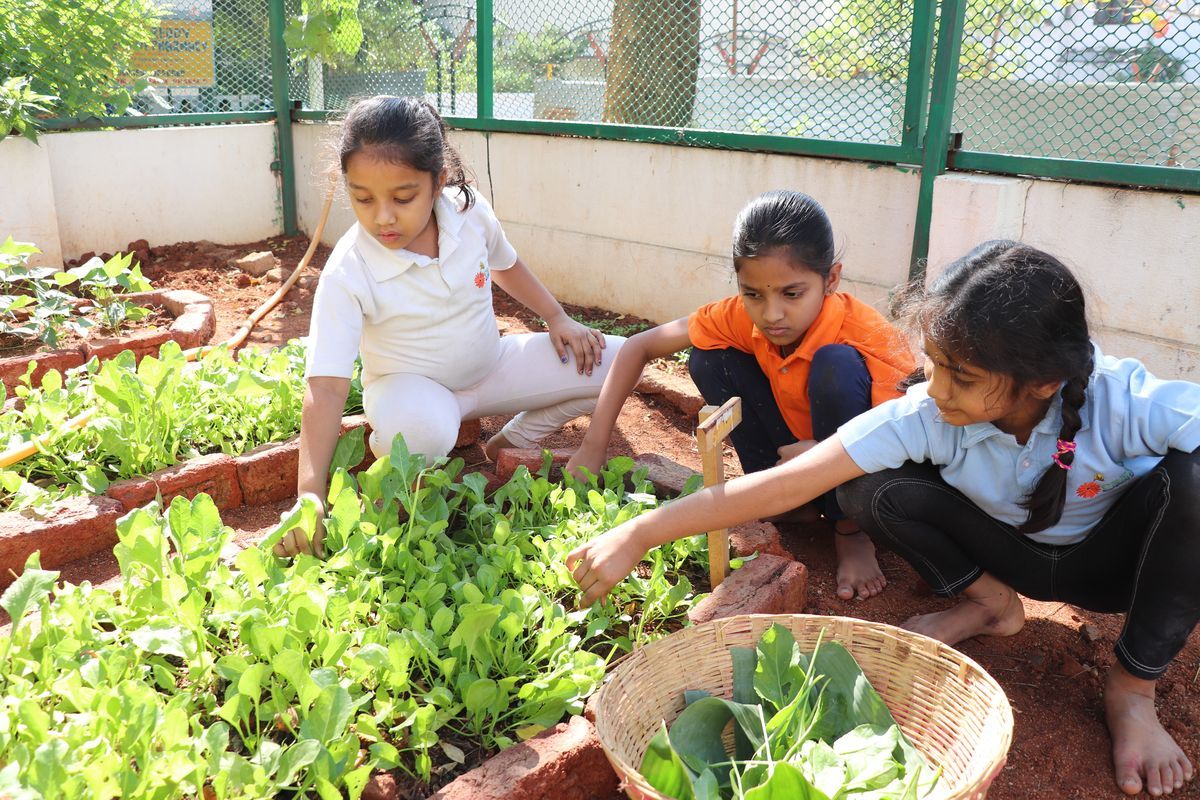
Art, carpentry, cooking, gardening, music, nature studies, permaculture, PE and puppetry. Community programmes like Books on Wheels and Saturday Santha.
Children plan their own visits to museums and institutions, and meet Montessori peers worldwide at the Global Montessori Games and Montessori Model UN.
Observation and conversation, never ranking. Mistakes aren’t feared here: children learn to pick themselves up, adapt and try again.
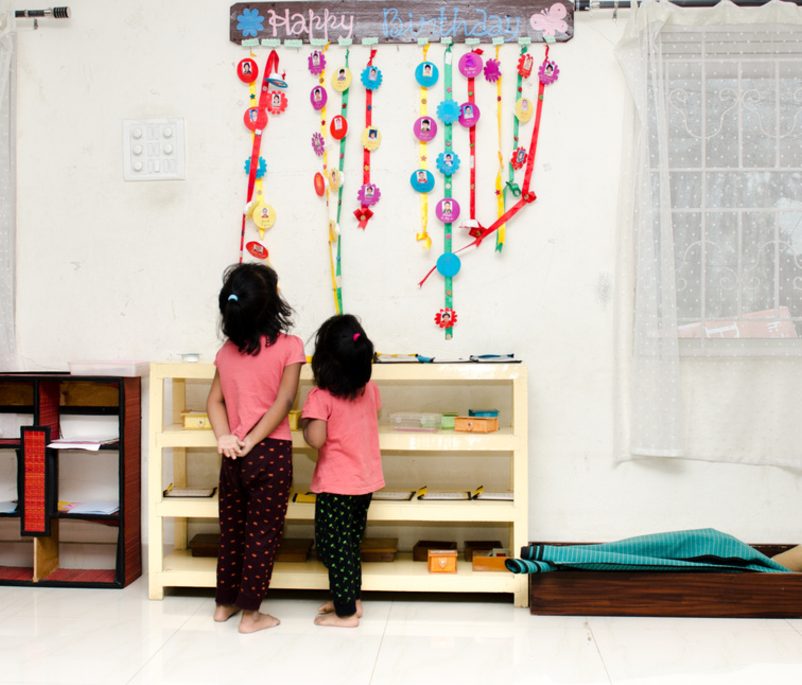
A space designed for independence. Every material has a purpose and lets children spot their own mistakes.
No gold stars, no red marks: children learn for the joy of it, not for external approval or validation.
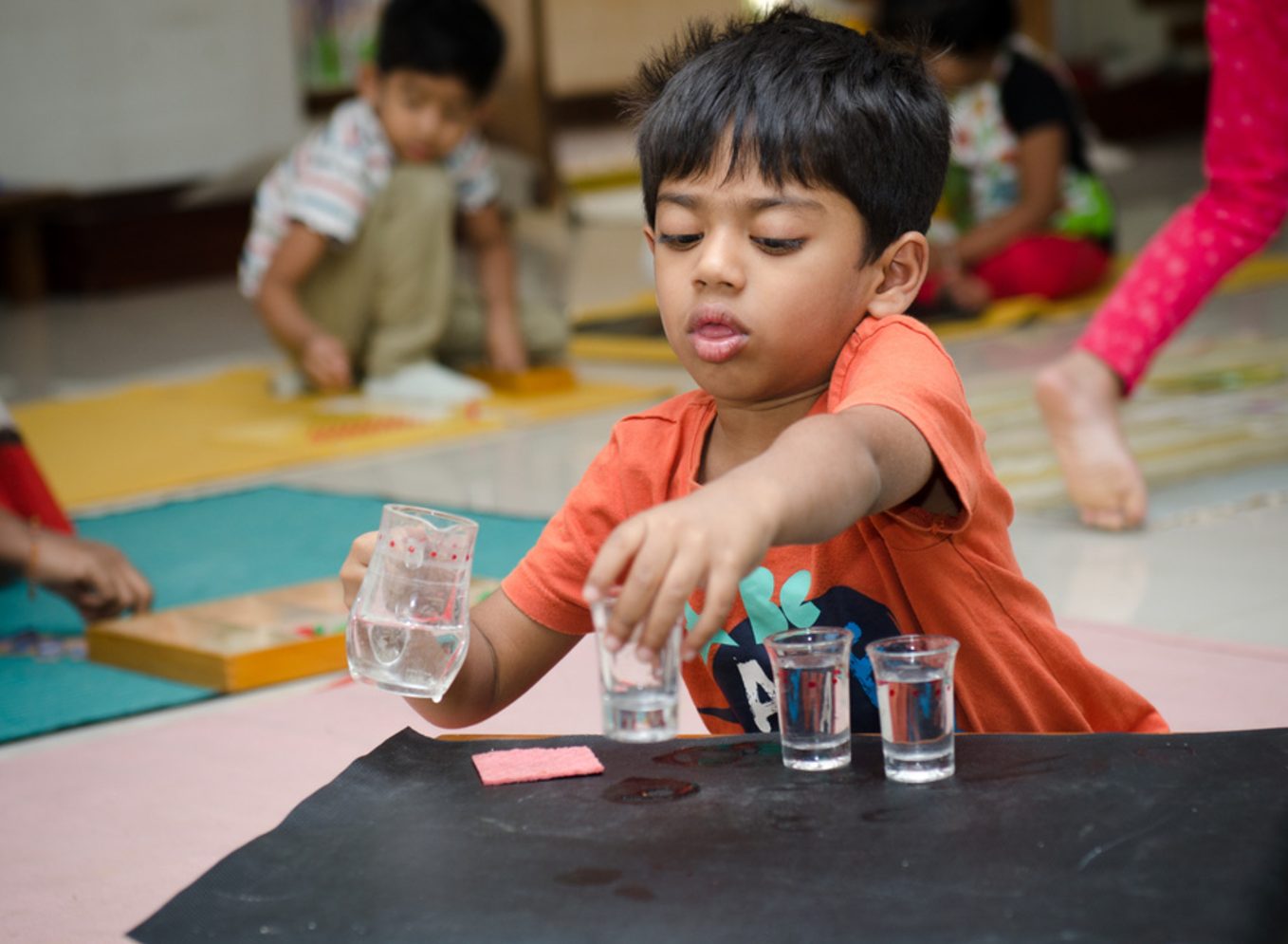
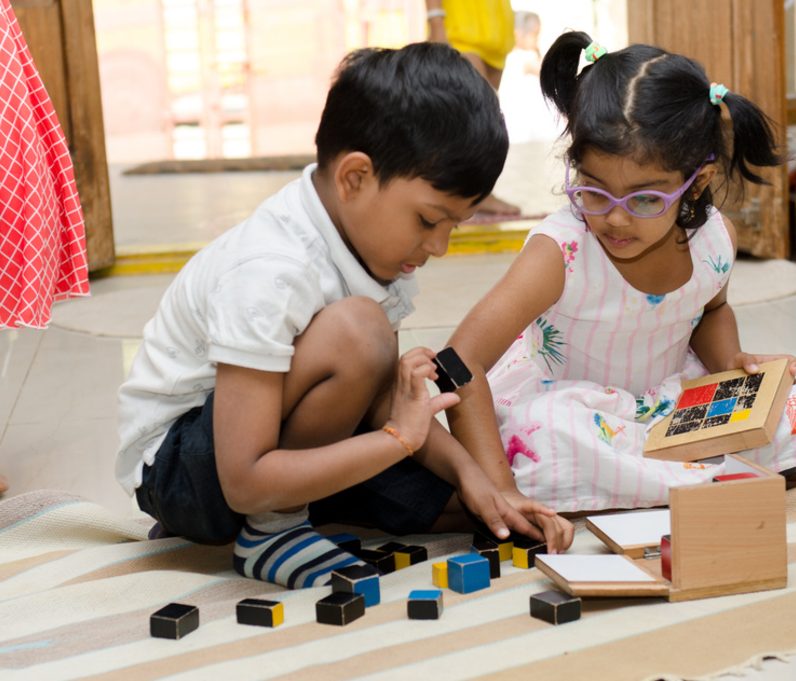
Independence, order and a love of learning through the senses.
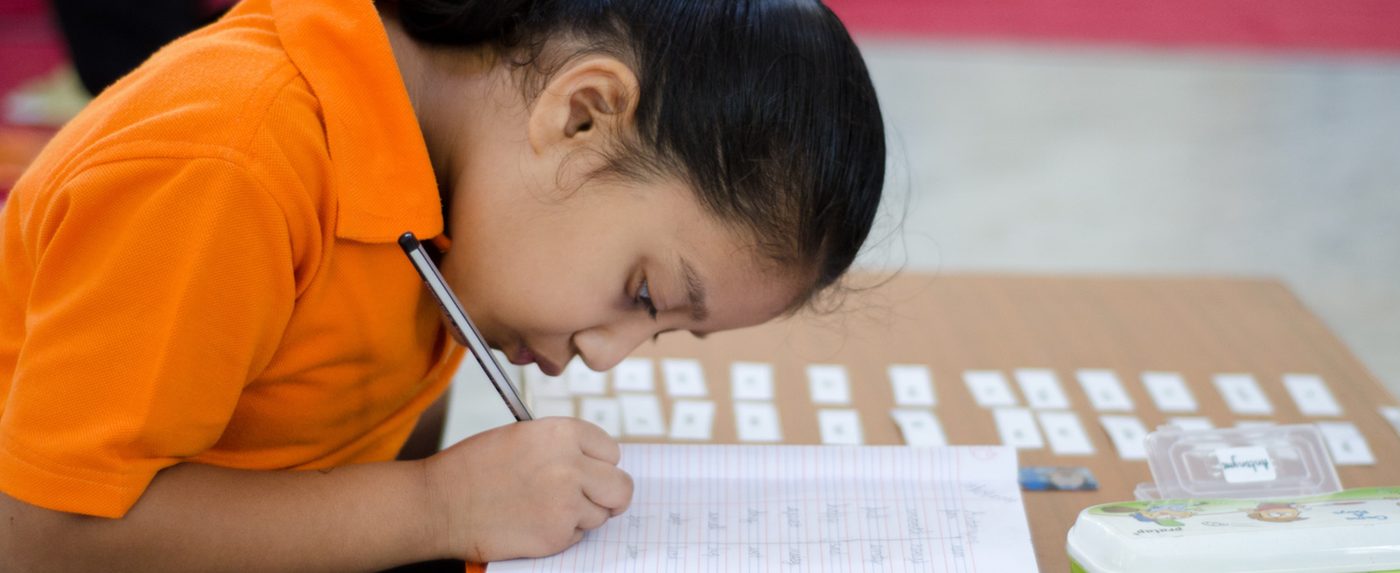
Reasoning, imagination and the big questions.
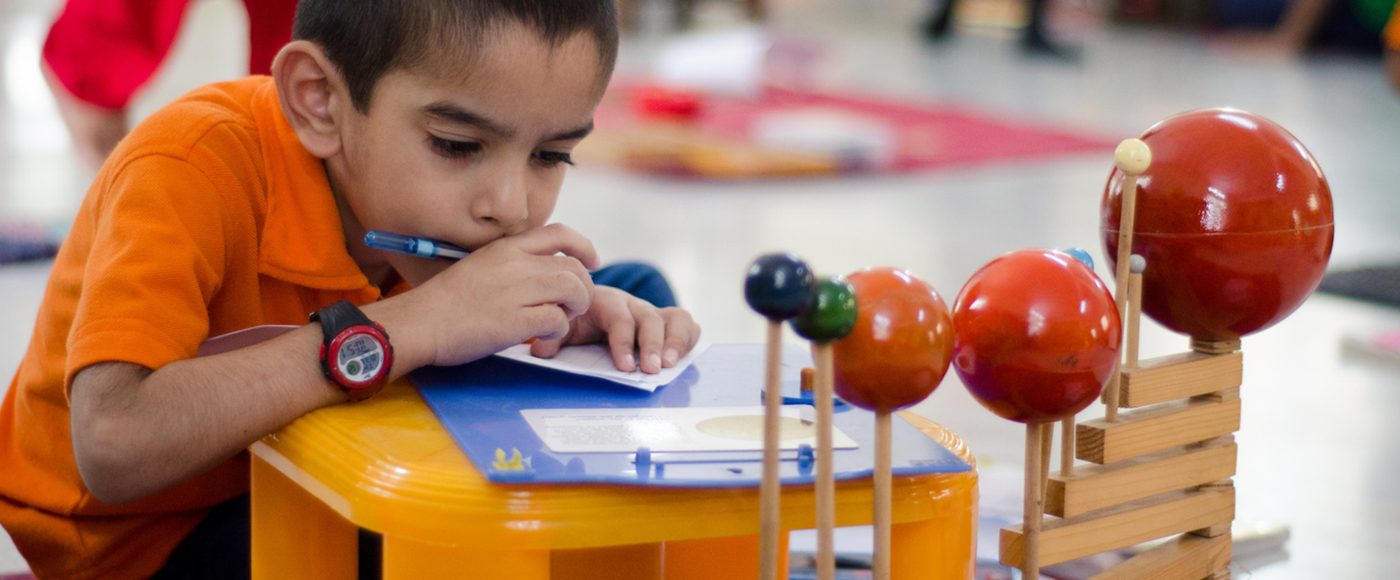
Research, collaboration and deeper abstraction.
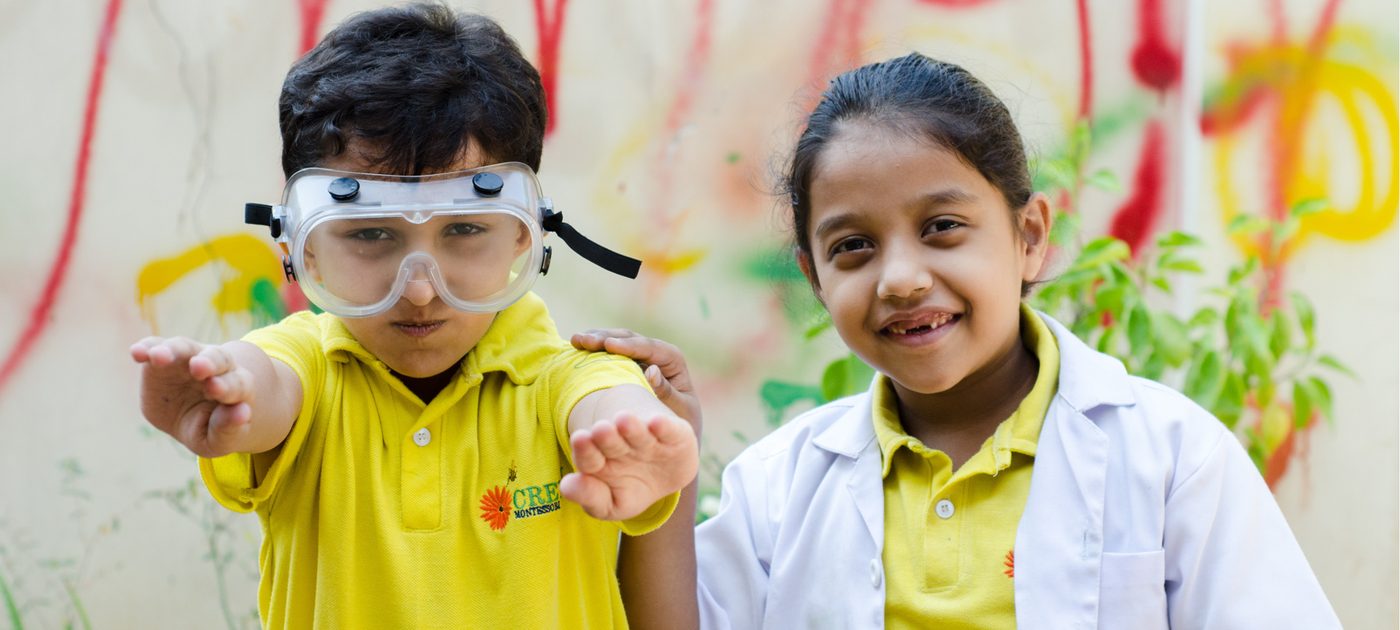
Real work, real responsibility, and the NIOS Grade 10 certificate.
The morning opens with a long work period, chosen by interest. Then snack, circle time with songs, and outdoor play, nature walks, music or stories. Older children stay on for early reading and writing, and help prepare lunch.
Circle time to start. A long morning work period for academics, research and projects. Afternoons for languages, music, puppetry, gardening, reading and journaling. Non-competitive games to wrap up the day.
Adolescents plan their time in work–study cycles of several weeks. The cohort chooses a project and makes a weekly plan: mornings for the work, afternoons for study. They meet regularly with peers, teachers and outside specialists, and run their own Production and Exchange programme, earning money for their community.
Grade 10 follows the NIOS curriculum. Before that, an integrated Montessori-inspired curriculum, reviewed regularly to include relevant CBSE, ICSE and Telangana SSC content.
| Group | Arrive | Long work period | Leave |
|---|---|---|---|
| Primary, younger | 8:30 am | Morning | 11:30 am |
| Primary, older | 8:30 am | Morning | 2:00 pm |
| Elementary (6–12) | 8:30 am | 9:00 am – 12:30 pm | 3:45 pm |
| Adolescent (12–15) | 8:30 am | 9:00 am – 12:30 pm | 4:15 pm |
While a young child is settling in, their day may be shorter. Guides decide this with parents.
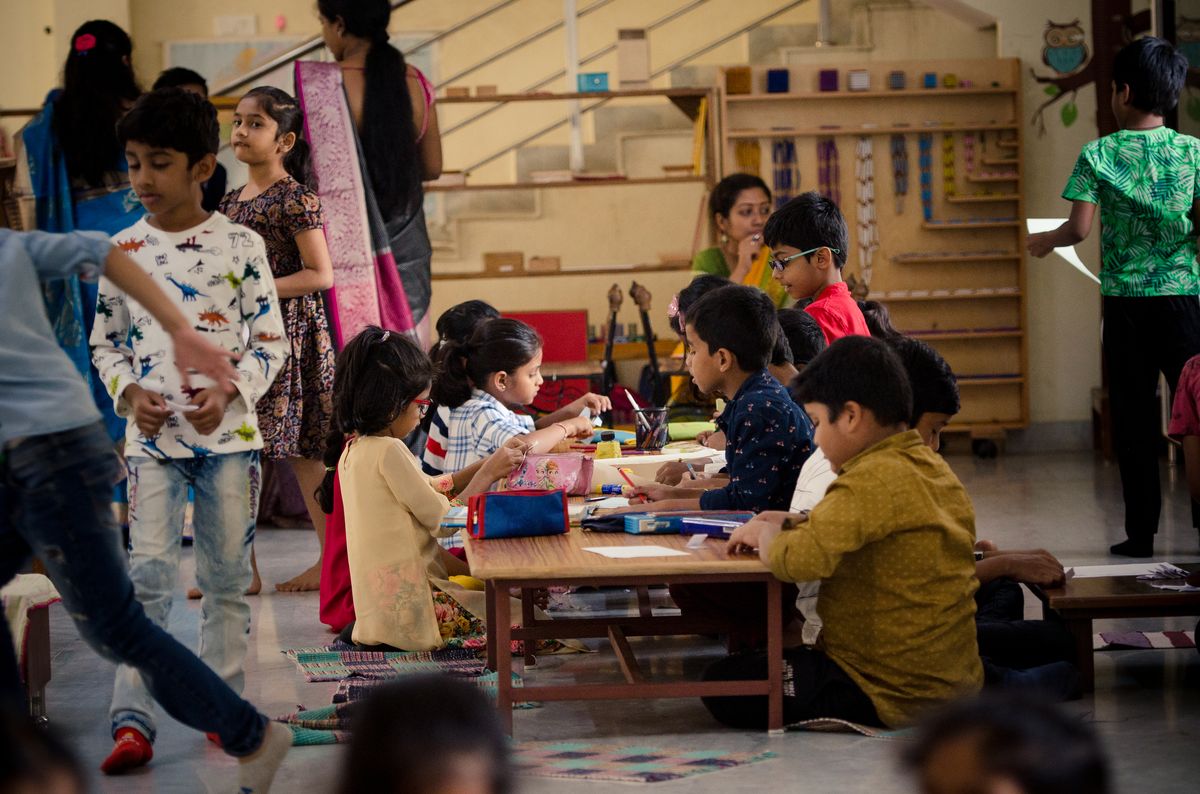
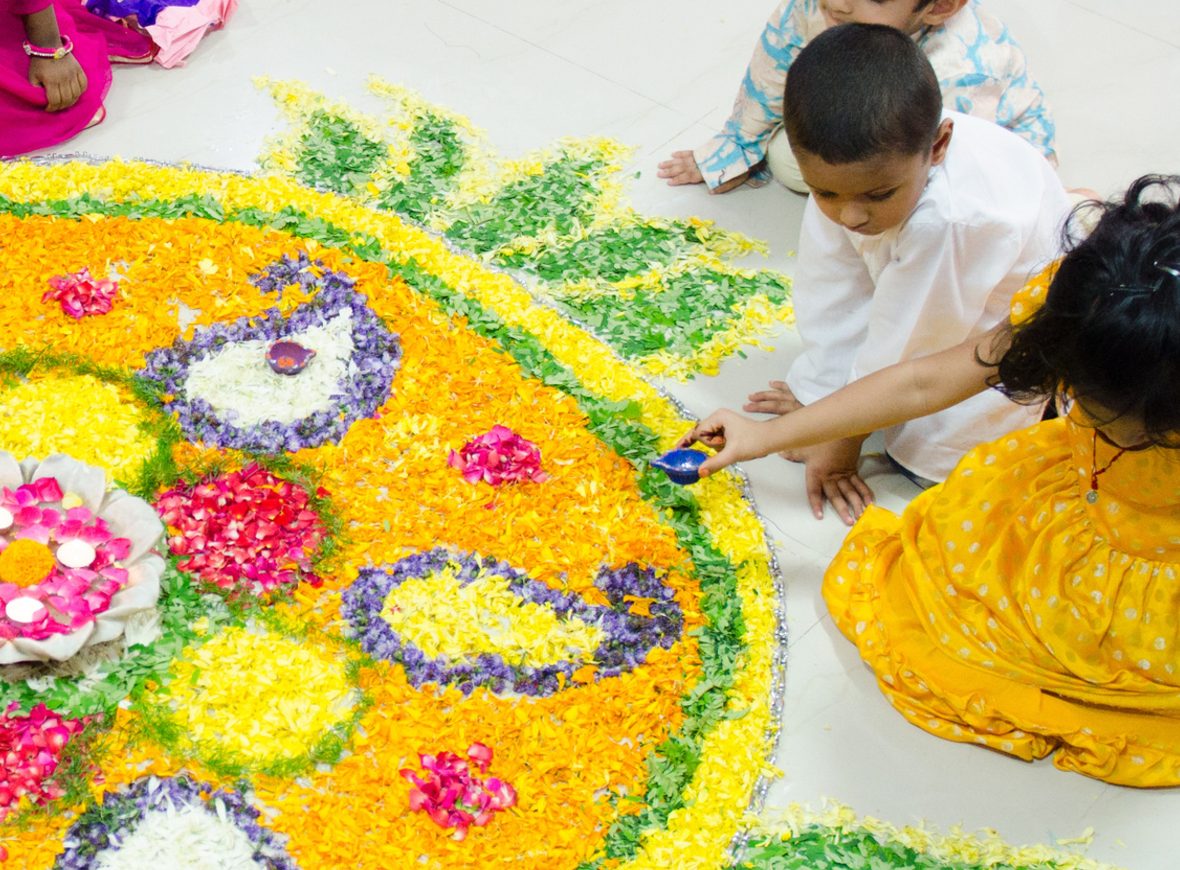
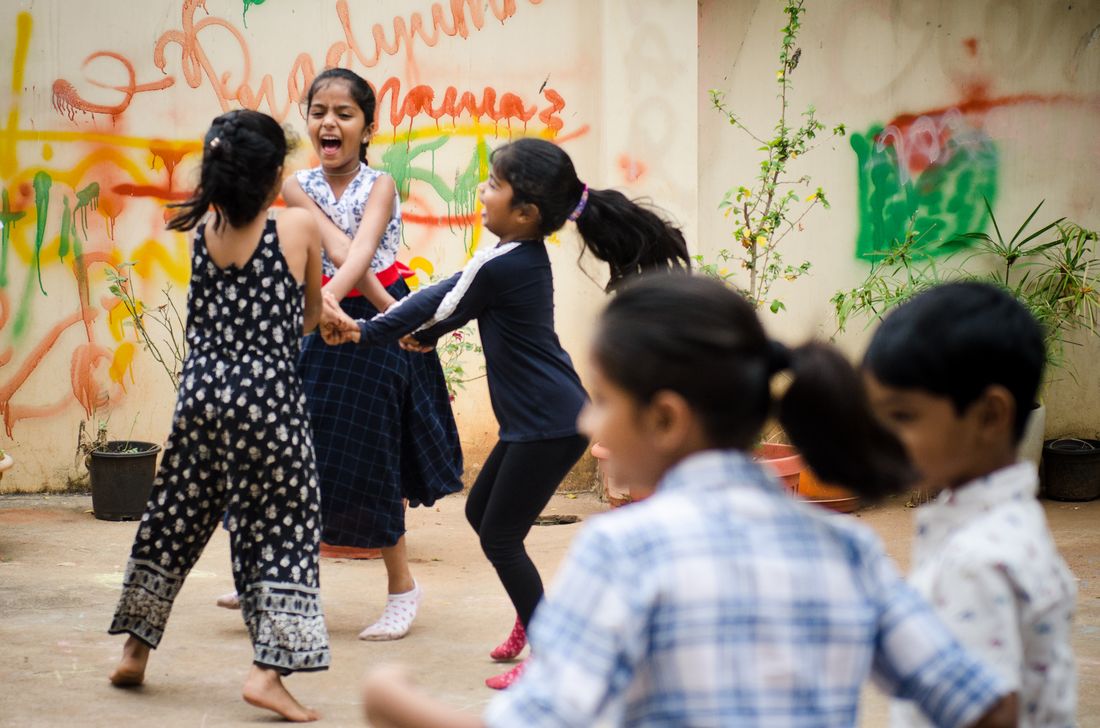
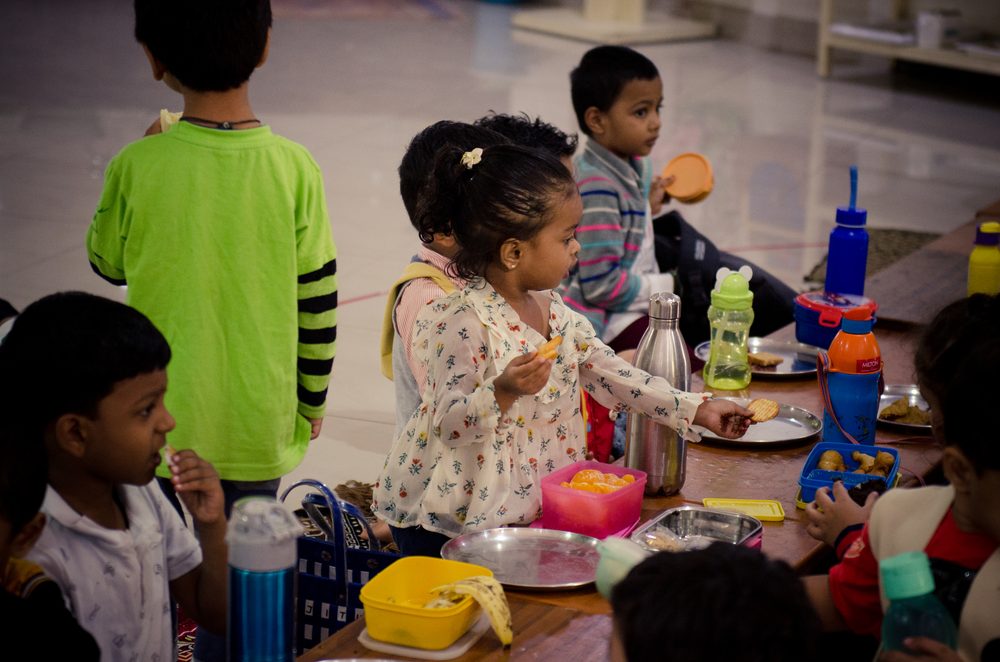
Everything a child encounters becomes part of their music: the songs of a life, with a beginning but no end.
We compose them instinctively, guided by the hand of creation:sometimes wide awake, sometimes dreaming, but always alert;sometimes happy, sometimes sad, but always feeling.
Every person we meet adds a note to the tune.Some teach us humility, others grace,a few, the quiet that holds a song together.
And so the simplest work is the hardest of all:not to reach in, but to hold our hands still,to keep each child free enough to hear their own music,and to trust them to sing it, in their own time.
Cremon Montessori Life School
Vinaya Palagiri came to Montessori as a parent, searching for the right school for her own child. She found it in a clear framework for adults and real freedom for children.
Cremon began with one environment and a handful of children, and grew with parents’ support and children’s visible progress.
Montessori has been our backbone from day one. As our work reached into carpentry, permaculture, nature studies, the city, the wider world and Grade 10, “Life School” became the name for what we are.
12 July to 30 November 2026
1 December 2026 to 12 April 2027
“I wish every school in the world was like Cremon.”
Now admitting for the December Primary cohort, from 2.5 years.
Admissions are open for Elementary and Adolescent for the 2027–28 academic year.
Parents visit first, without their child, for a tour and an unhurried conversation.
Your child spends a few days with us while our guides observe. We share what we see, and how to ease the transition.
2 to 5 daysBy mutual agreement, followed by the application, documents and fees.
After the first two steps, take the time you need to decide.
From 2.5 years, in Primary.
All year round. Children have sensitive periods for learning, so they shouldn’t have to wait for a new academic year. Most children join in July or December, which helps them settle in well and keeps the environment calm for everyone.
NIOS (the National Institute of Open Schooling) is one of India’s three national boards, alongside CBSE and CISCE (ICSE). It is an autonomous body under the Ministry of Education, Government of India, and like every board it follows the National Curriculum Framework set by NCERT. Its Grade 10 and Grade 12 certificates carry the same recognition as those of any other board, for higher studies and university admission.
Flexibility. Children choose five to seven subjects from a wide list, including vocational ones, with no fixed combinations. Exams run twice a year, with on-demand exams too, so each child can take a subject when they are ready. That leaves time to build real skills and get a head start in a field they love.
A NIOS certificate, recognised for higher education in India and abroad.
We share fee details during admissions. Ask us at your campus tour.
12-2-822, Inside G. Pulla Reddy Educational Campus, Opp. Pillar 23, PVNR Expressway, Mehdipatnam, Hyderabad, Telangana 500 028
Get directions (opens Google Maps in a new tab)Children arrive by 8:30 am.
Long, uninterrupted work period9:00 am – 12:30 pm
While a young child is settling in, their day may be shorter. Guides decide this with parents.
 Parent login
Our parents’ area is deep in a long, uninterrupted work period, and you know the rule: we never interrupt concentration. It will be ready soon, at its own natural pace.
Until then, for notices, documents or a word with your child’s guide, call +91 98494 43063 or write to office@cremon.in.